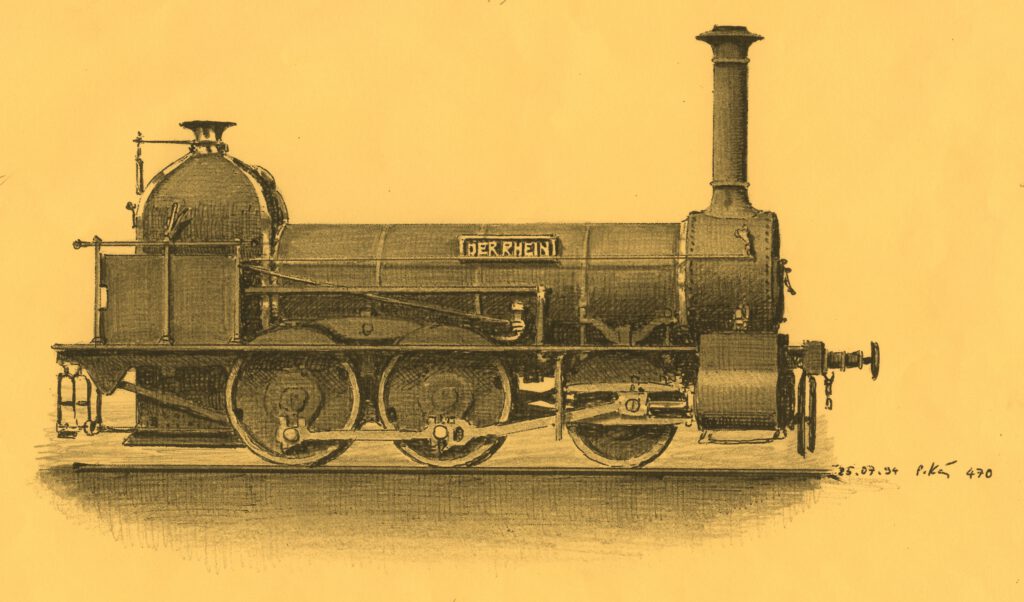
Lok Rhein: Investigation into the cause of the failed salvage attempt completed
Follow-up investigation report to clarify the cause of the failed recovery of Keßler locomotive 205 at the head of groyne 527 below Germersheim 1. as
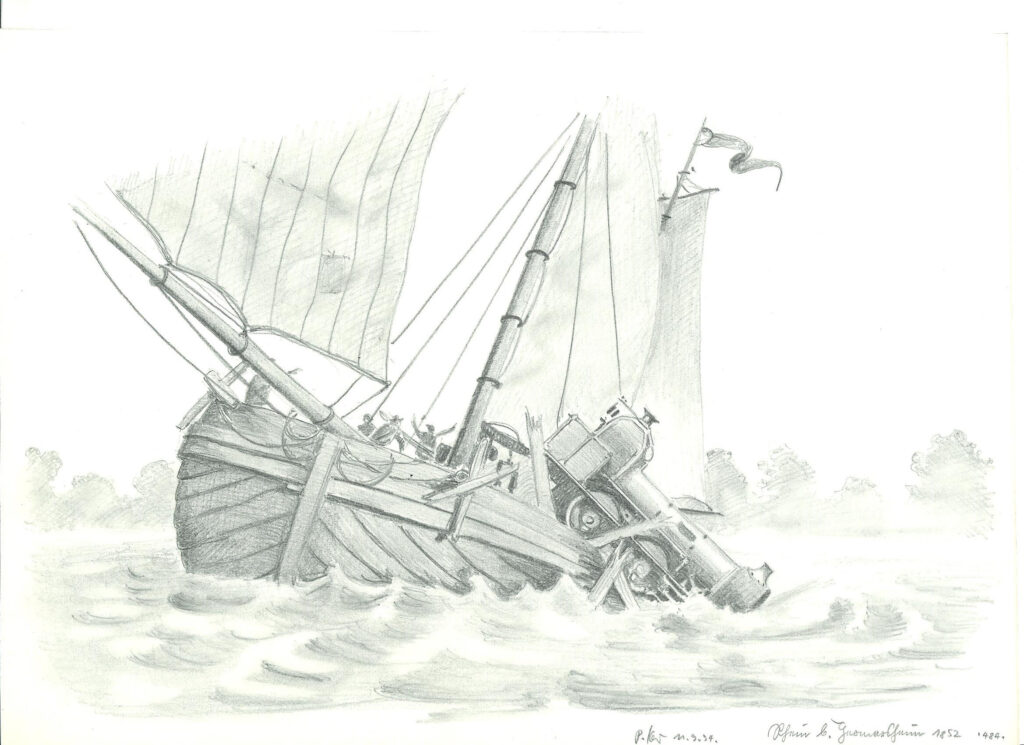
The locomotive was built in 1852 in Karlsruhe by the Maschinenbau-Gesellschaft Emil Keßler for the Düsseldorf – Elberfelder Eisenbahngesellschaft. The sailing vessel “Stadt Coblenz”, which was used for transport on the river Rhine, got caught in a heavy storm near the town of Germersheim, the load slipped and the locomotive sank. Two attempts to lift the locomotive failed, after which salvage operations were discontinued. Since then, the locomotive has been lying under the current or former riverbed of the river Rhine, probably hermetically sealed, waiting to be released from its slumber.
In 1992, after many years of research, the first concrete research work began on behalf of Horst Müller, a retired engine driver from Cochem, who was looking for a partner for the project, was immediately able to win our attention. Thanks to the cooperation with the geophysicist Prof. Bernhard Forkmann, it was possible to determine the location of the locomotive in the Rhine near Germersheim with a high degree of probability using the latest technology. The unique treasure hunt project attracted more and more media interest after the first solid data on the location and condition of the locomotive became known in 2014.
The official recovery was scheduled for 21 October 2018. After several weeks of intensive excavations, however, no locomotive was found (see press report). The disappointment of all involved was accordingly great. The project should be declared a failure at this point.
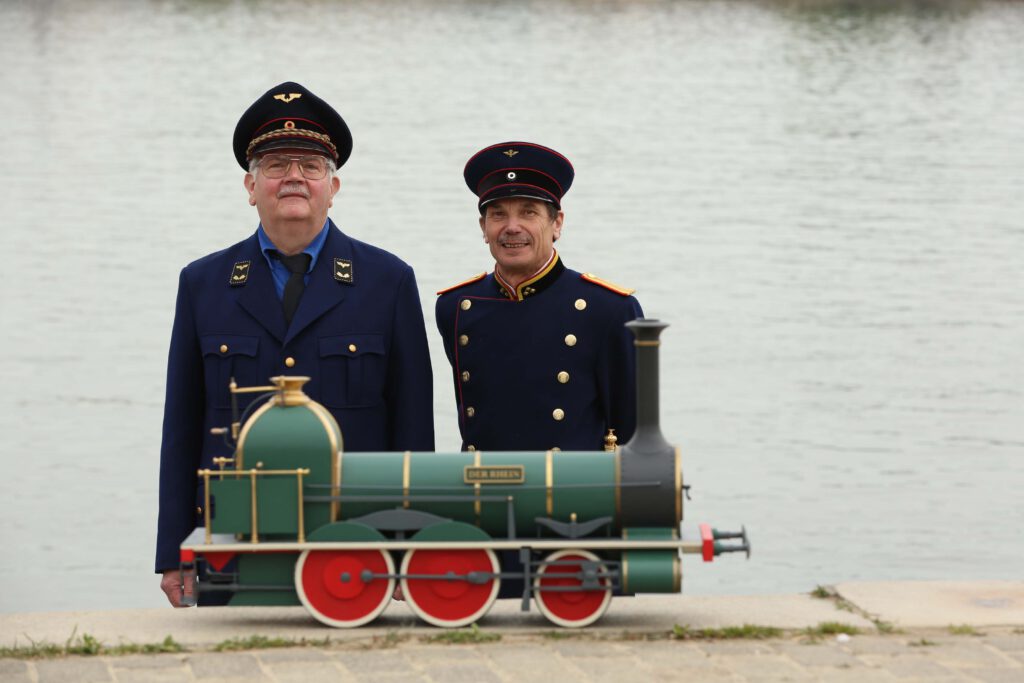
Once the initial shock had subsided, measurements and analyses of the excavated material were carried out and summarised in a report on the findings. Despite this setback, and particularly in view of the strong public support, it was decided to continue with the project. If the recovery operation were successful, the ‘Rhein’ locomotive would, after all, be the oldest surviving steam locomotive in Germany and would then be exhibited at the Darmstadt-Kranichstein Railway Museum on permanent loan from the State of Rhineland-Palatinate.
As a re-examination of promising potential sites has, unfortunately, failed to yield any conclusive evidence or clues, the project has been on hold since 2020.
Following a further review of the research options, a decision was taken in the summer of 2026 to discontinue the project permanently.
The Executive Board of Museumsbahn e. V., together with the key contributors, retired locomotive driver Horst Müller and Prof. Dr Bernhard Forkmann, have agreed that, after 33 years, no further action will be taken to recover the locomotive from the Rhine. All parties involved are of the view that continuing the search would require a significantly greater technical effort, which would exceed the human and financial resources of all those involved. Furthermore, the condition of the locomotive cannot be assessed, which makes the prospects of success appear highly uncertain and, against the backdrop of the failed recovery attempt in 2018, also makes it difficult to secure sponsors for this project once again.
Prof. Dr Bernhard Forkmann, Horst Müller and the Museumsbahn e. V. remain in agreement that the findings produced so far as part of the project should be made available to other stakeholders who wish to continue the project.
The Museumsbahn e. V. would like to thank all the individuals and organisations who have actively supported this project, both on a full-time basis and, to a large extent, on a voluntary basis in particular!

Follow-up investigation report to clarify the cause of the failed recovery of Keßler locomotive 205 at the head of groyne 527 below Germersheim 1. as

In his blog “Archaeologik”, archaeology professor Rainer Schreg from the University of Bamberg assesses the “research project” around the Lok Rhein as a prime example
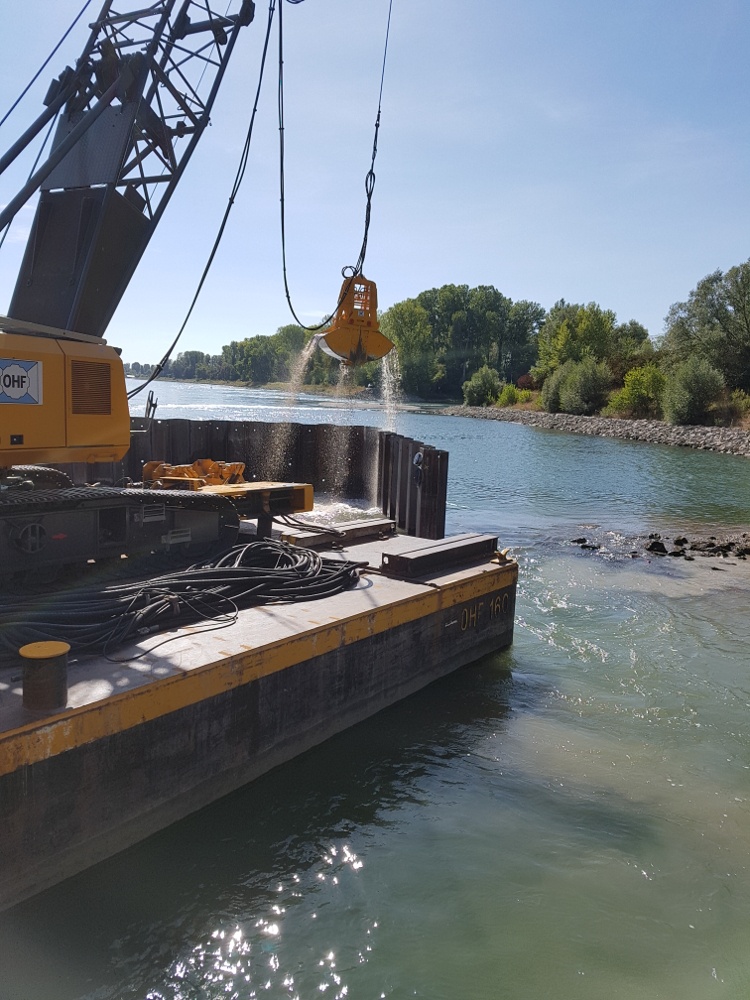
Large-scale excavation work could not unearth the locomotive “Rhein” Mainz/Germersheim, 2 October 2018. “I am dismayed and perplexed. I cannot explain what anomaly we have
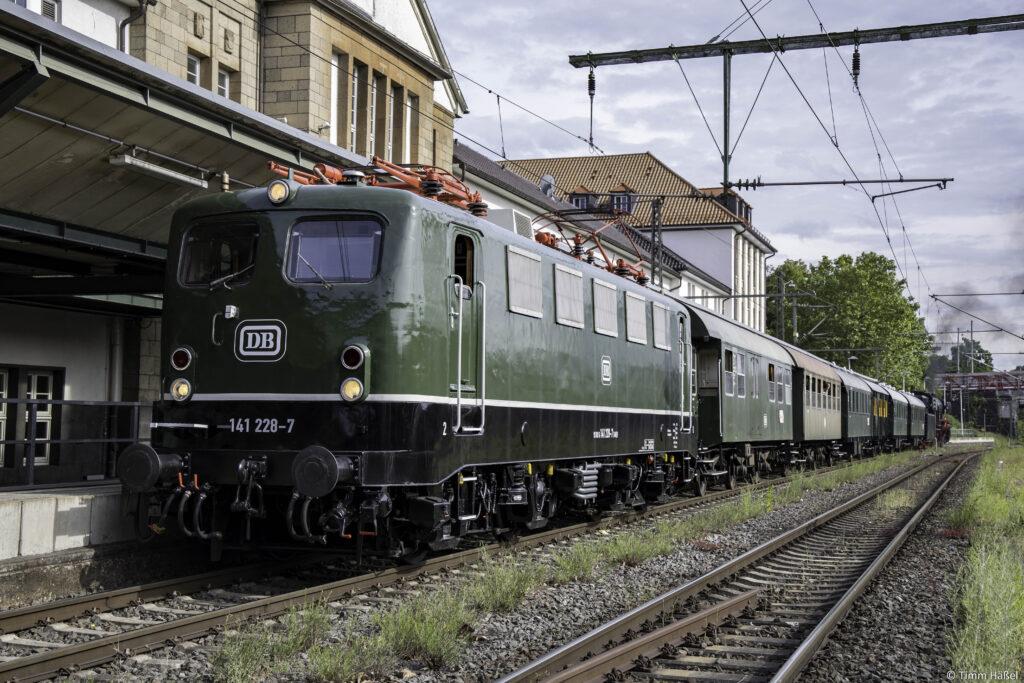
On Saturday 22 August 2026, we’ll be taking you from Darmstadt Central Station to the beautiful Ahr Valley on train 141 228-7!
Come and discover the fascinating history of the former government bunker in Ahrweiler, or enjoy the delicious wine and other culinary delights on offer at the ‘rural wine festival’!
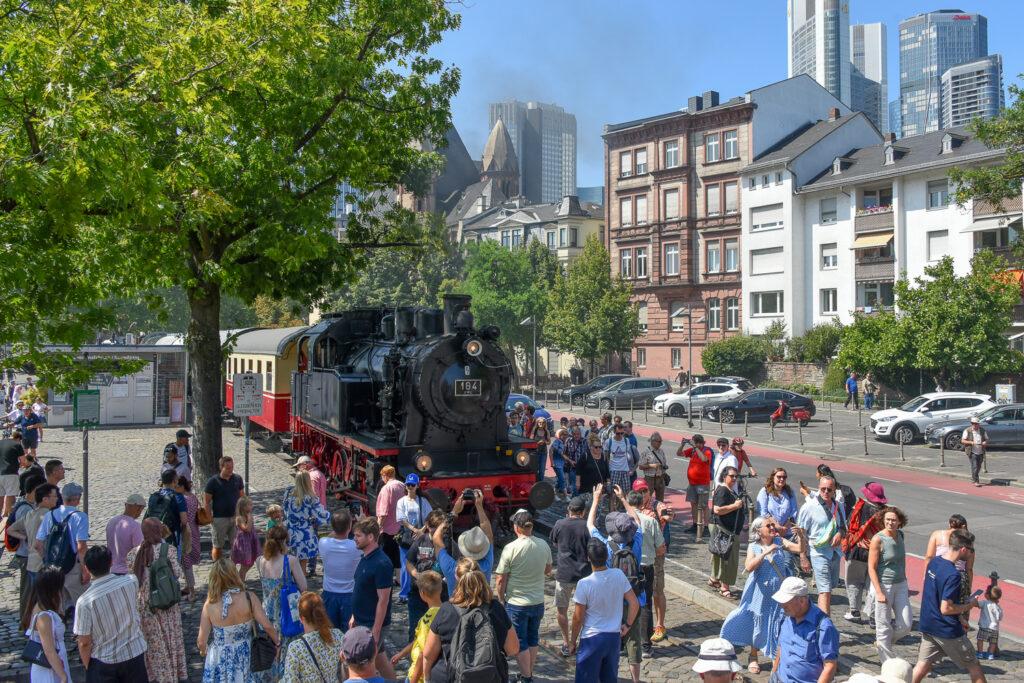
On Sunday 6 September 2026, a special steam train hauled by ELNA 184 DME will run on the Frankfurt Harbour Railway!
At a total of four stops, you will learn about the fascinating industrial history of Frankfurt’s banks of the Main as part of the ‘Rhine-Main Industrial Heritage Days’ and this year’s theme, ‘The Dawn of the Modern Age’.
Mit unserem Jubiläumskalender feiern wir 50 Jahre Eisenbahnmuseum Darmstadt-Kranichstein – eines der bedeutendsten Eisenbahnmuseen Deutschlands. Die zwölf eindrucksvollen Motive zeigen dabei verschiedene Exponate im Kontext unvergesslicher historischer Meilensteine aus fünf Jahrzehnten gelebter Eisenbahnkultur.
For better reading, the masculine form is used for personal names and personal nouns on this website. Corresponding terms apply in principle to all genders for the purpose of equal treatment. The abbreviated form of language is for editorial reasons only and does not imply any valuation.
Sie erhalten in Kürze eine E-Mail an die von Ihnen angegebene E-Mail-Adresse. Bitte bestätigen Sie Ihre Newsletteranmeldung über den darin enthaltenen Link.